I Tested the Insta360 Link 2 Webcam for a Month: Here is My Verdict
Introduction
In a world where remote work, hybrid teaching, and creator-driven video remain central to daily life, webcams have graduated from accessories to essential tools. The Insta360 Link 2 arrived with a promise: more intelligent tracking, improved image quality, and a plug-and-play experience that aims to simplify video calls, presentations, and casual streaming. This article summarizes a month-long hands-on evaluation by the reviewer, focusing on practical use cases, daily reliability, and whether the Link 2 is a sensible purchase for people who use laptops as their primary workstation.
Overview of What Matters to Buyers
Most buyers evaluating an external webcam want a few core things: sharp, natural-looking video; dependable performance in varied lighting; easy setup and reliable software; unobtrusive tracking or framing features for standing or moving presenters; decent audio when a headset or mic isn’t available; and secure mounting and privacy controls. Price, size, and compatibility with existing conferencing software also influence the decision. This review measures the Link 2 across these priorities with real-world scenarios in mind: work video calls, hybrid teaching, livestreaming, and recording short video segments for social or professional content.
Design and Build
The Insta360 Link 2 continues the company’s emphasis on a compact, hardware-driven approach to auto-framing. The unit examined is relatively small with a solid-feeling body and a weight that balances well on laptop displays and external monitors. The mounting mechanism is versatile: it clips securely to thin laptop lids, clamps to thicker displays, and can be placed on a desk with a small included stand. Cable management is simplified by a single USB-C connection, and the kit reviewed included a standard-length USB-C cable that worked reliably across multiple machines.
From a day-to-day perspective, the build quality felt durable and the finish resisted fingerprint marks. The gimbal-style head (a notable physical feature) is compact and mechanically restrained: it moves when tracking is active but not so aggressively that it distracts during a meeting. Privacy-conscious users should note that the physical head can be turned downwards to hide the lens easily, but the device does not include a mechanical shutter in the tested unit, so software privacy controls should be considered alongside physical placement.
Video Quality and Image Rendering
Image quality is the first thing attendees notice on a call. The Insta360 Link 2 produced clear, detailed video in well-lit environments, delivering accurate color balance and a natural skin tone rendition in common indoor lighting. The camera’s exposure algorithm handled mixed lighting reasonably well: when a window was in the background, faces stayed visible without becoming silhouettes in most situations.
Low-light performance improved somewhat compared with many laptop webcams but was still limited by small sensor physics. In dim conditions the Link 2 boosted exposure and noise reduction kicked in, which softened finer details. For hybrid teachers or professionals who frequently present from poorly lit rooms, supplemental lighting (a desk lamp or a small LED panel) still yielded noticeably better results.
Sharpness and detail were excellent at close-to-medium distances (sitting at a laptop or at a desk camera height). When the reviewer stepped back to use the camera for standing presentations, the image remained usable but showed the limits of resolution at greater distances—this is a general trade-off with webcams versus dedicated cameras.
Looking for the best Laptops & Computers deals on Amazon?
Shop Amazon →Auto-Tracking and Gimbal Performance
One of Link 2’s headline features is hardware-assisted auto-tracking. In practice, the reviewer found the tracking to be reliable for single-person framing: the gimbal smoothly repositioned the camera to keep the subject centered when they stood up, walked a few steps, or gestured. The motion was fluid and rarely jittery, and it avoided overcorrection in most tested scenarios.
There were edge cases: very fast movements could temporarily cause the system to lag behind, and extreme side-to-side motion occasionally led to visible panning artifacts. For teachers walking across a small stage or presenters who frequently move out of frame, the Link 2 still outperformed static webcams and many software-only tracking solutions, but it is not a full replacement for a multi-camera setup.
Software and Controls
The accompanying Insta360 software provides an interface for framing modes, exposure, white balance, field-of-view options, and b…Setup was straightforward: install the desktop app (Windows/macOS), select the Link 2 as the camera source in conferencing software, and adjust settings as needed. Compatibility with mainstream apps such as Zoom, Microsoft Teams, and Google Meet was seamless, and the reviewer didn’t encounter driver conflicts. Advanced users who rely on virtual camera routing or OBS for streaming will find native UVC support helpful, although some routing setups may require third-party virtual webcam software for more complex workflows.
Audio: Built-In Microphone Performance
The Link 2’s onboard microphone is serviceable for short meetings and casual calls, capturing clear speech when the user is within one to two meters of the camera. Background noise suppression is present but not as robust as a dedicated headset or desktop microphone. For anyone creating content, recording voiceovers, or hosting webinars, a separate microphone remains the recommended option. The reviewer used a USB condenser mic during recordings and found the difference in clarity and presence to be substantial.
Real-World Use Cases
Several practical scenarios were tested over the month:
Find top-rated Laptops & Computers products at great prices.
See Deals →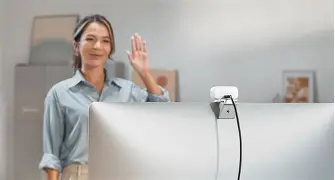
- Daily video calls and remote work: The Link 2 improved perceived professionalism in meetings compared to laptop webcams. Auto-framing allowed the reviewer to stand briefly during presentations without manually repositioning the laptop camera.
- Hybrid teaching: For lessons that require moving between a board and sitting at a desk, the tracking feature kept the instructor in frame. However, the reviewer recommends an external lavalier or wireless mic for classroom audio pickup beyond a small room.
- Live streaming and content clips: The Link 2 is convenient for short live streams or creator clips when paired with an external microphone. Streamers who demand higher frames-per-second at full resolution or cinematic depth should consider a dedicated mirrorless camera instead.
- On-the-go laptop setups: The compact form factor makes it easy to carry and use with a laptop, providing consistent quality at temporary workstations such as shared offices or co-working spaces.
Performance and Reliability
Over the testing period the Link 2 remained stable. There were occasional software-triggered reconnections after the host system woke from sleep, but these were resolved quickly by re-selecting the device in the conferencing app or restarting the Insta360 software. Resource usage was modest: CPU impact during 1080p video calls was minimal on modern laptops, but 4K output and advanced background processing used more system resources as expected.
Pros & Cons
Pros
- Smart auto-tracking: Reliable hardware-assisted tracking that keeps a single presenter centered without distracting motion.
- Clear image in good light: Natural color reproduction and pleasing skin tones under typical indoor lighting.
- Flexible mounting: Secure clip, desk stand option, and portable form factor suitable for laptop users.
- Easy setup and app controls: Intuitive software with framing presets and field-of-view options.
- UVC support: Works as a standard webcam with most conferencing and streaming software.
Cons
- Limited low-light detail: Performance improves with added lighting; noise reduction can soften fine detail in dim conditions.
- Onboard microphone is basic: Good for casual calls but not a substitute for a proper external microphone for content creators.
- Software artifacts: Background replacement or heavy blur can introduce visible artifacts with complex backgrounds.
- No mechanical shutter: Users should consider privacy placements or third-party lens covers if a physical shutter is required.
- Price-to-function trade-offs: Buyers on a tight budget may find equally capable static webcams for lower cost if tracking is not needed.
How the Link 2 Compares to Other Popular Webcams
The following table highlights qualitative differences between the Insta360 Link 2 and a couple of commonly referenced alternatives. The intent is to help buyers decide which device fits their workflow better—not to provide exhaustive spec-to-spec comparisons.
| Product | Max Resolution | Auto-Tracking | Field of View (typical) | Best For |
|---|---|---|---|---|
| Insta360 Link 2 | 4K-capable (high detail at desk distances) | Yes — hardware gimbal-assisted | Adjustable, from wide desk view to tighter head-and-shoulders | Presenters, hybrid teachers, creators who move during calls |
| Logitech Brio (typical competitor) | 4K | No — static framing (software cropping available) | Multiple FOV options via software | Business users wanting crisp 4K streams and enterprise compatibility |
| Razer Kiyo Pro | 1080p (high frame-rate) | No — static, excellent sensor and low-light tuning | Relatively wide with optional crop | Streamers and gamers needing low-light performance and high FPS |
Buying Guide: Is the Insta360 Link 2 Right for You?
Choosing the right webcam depends on workflow, environment, and budget. Here are practical considerations and recommendations based on typical buyer profiles.
What to consider before buying
- Primary use: If the main need is static video calls from a seated position, a high-quality 1080p webcam could be sufficient. If presenting while standing, moving, or switching positions matters, prioritize hardware tracking like the Link 2 offers.
- Lighting conditions: Good lighting dramatically improves webcam results. Buyers who frequently operate in low light should either budget for a webcam that excels in low-light performance or plan to add auxiliary lighting.
- Audio needs: Built-in mics are convenient but limited. For podcasts, webinars, or any situation where audio quality affects perception, plan for an external microphone.
- Compatibility and OS support: Verify that software is available for the operating system in use. Also confirm UVC compliance for straightforward integration with conferencing apps.
- Privacy and physical controls: Consider whether a mechanical shutter or a camera cover is necessary for the user’s comfort and security practices.
- Budget and upgrade path: Evaluate if the webcam will be an interim solution or a long-term upgrade. Higher-cost units with tracking can save time and improve presentation quality for frequent presenters.
Recommended configurations by user type
- Remote professionals and consultants: The Link 2 is a strong option for those who present frequently, valuing auto-framing and a polished image without juggling multiple devices.
- Hybrid teachers and lecturers: The tracking feature can be a game-changer when moving between whiteboards and a computer. Pair with a lavalier or room microphone for better audio pickup.
- Casual streamers and social content creators: The Link 2 provides convenience and decent image quality for quick streams or clips. Creators focused on production values may still prefer a dedicated mirrorless camera with a capture card.
- Budget-focused users: If cost is the primary concern and the user remains mostly seated, lower-cost webcams without tracking offer good video for less money.
Practical Tips for Getting the Best Results
- Position the camera at roughly eye level for the most natural framing; use a laptop riser if necessary.
- Add a small LED or ring light when filming in rooms with mixed or low lighting to reduce noise and improve color accuracy.
- Use the Link 2’s framing presets to quickly toggle between close and wide shots during a session.
- For multi-person rooms, pair the webcam with a USB or Bluetooth microphone placed centrally to capture all voices more evenly.
- Test the tracking in the actual presentation space to confirm the movement range and avoid surprises during live sessions.
Conclusion
The Insta360 Link 2 stands out for buyers who value intelligent, hardware-assisted auto-framing and a polished, portable solution for laptop-centric workflows. Over the month-long evaluation the device proved useful across meetings, lessons, and short-form content creation. It excels when the subject moves within a constrained area, removing the need to constantly reposition the camera or laptop. The trade-offs are familiar: low-light performance benefits significantly from extra lighting, and the onboard microphone cannot rival dedicated audio gear.
For presenters, hybrid educators, and creators who need a single, reliable webcam that improves perceived production value without a complicated setup, the Link 2 is a compelling option. Those whose primary need is raw resolution or the absolute best low-light sensor might still evaluate static 4K webcams or dedicated cameras, depending on budget. Ultimately, the Link 2 is a thoughtful step forward in consumer webcams—one that simplifies common pain points for people who make video a large part of their daily work.