Should You Buy the Blackshark V2 Pro Wireless 2020 in 2026? A Deep Dive
Introduction
I've been using the Razer Blackshark V2 Pro Wireless (the 2020 model) on and off for several months now, and I wanted to write a thorough, no-nonsense take on whether it still makes sense to buy in 2026. When I picked one up, my goal was simple: get a comfortable wireless gaming headset with good positional audio and a decent mic for streaming and Discord without spending flagship-level money. After testing it across long gaming sessions, music listening, and voice calls, I have a clear sense of where this headset still shines and where its age shows.
What I tested and how
In my experience, practical testing matters more than spec sheets. I used the Blackshark V2 Pro as my daily driver for gaming (competitive shooters and single-player story games), casual music listening, and voice chats over Discord and Zoom. I used the 2.4GHz wireless dongle on a Windows desktop, tried THX Spatial Audio through Razer's software, and compared it informally to a couple of modern wireless headsets I own. I also wore it for several multi-hour sessions to judge comfort and heat, and I ran battery tests from a full charge with mixed use (gaming + voice + occasional music).
Design, build quality, and comfort
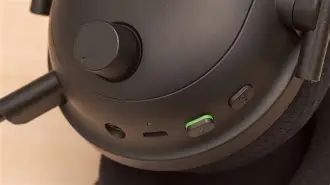
Out of the box, the Blackshark V2 Pro feels built for esports: it’s light, with a matte finish and understated Razer branding. What I appreciated immediately was the minimal bulk — the headset doesn't scream “gamer” in a way that would embarrass you in public. The earcups use breathable fabric pads and a memory-foam-like filling that conforms to my ears. In my experience, the earcups strike a comfortable balance: they clamp enough to stay stable during head movement but not so hard that my temples started to hurt after prolonged wear.
One specific thing I noticed was how the headband distributes weight. Unlike some heavier wireless headsets, the Blackshark’s headband construction keeps pressure off a single point on my skull. After three- to four-hour sessions I usually had only the mildest pressure marks, and heat buildup was low thanks to the fabric pads. That said, if you prefer leatherette pads for better deep-bass sealing or a cooler surface in winter, the V2 Pro’s fabric might feel a touch less premium.
Build quality is competent rather than luxurious. The frame is mostly plastic, but it held up fine to daily use in my household. The earcup swivels are simple but solid. My disappointment: the headset felt like it would show wear on high-contact areas after a couple of years — the finish isn’t scratch-proof and the padding isn't replaceable with first-party parts readily available in my region (I had to source third-party pads online).
Sound signature and audio performance
My biggest reason for keeping this headset around was the sound tuning. In my experience, the Blackshark V2 Pro leans toward a clear, mid-focused sound with tight highs and controlled bass that’s tuned for competitive gaming — footsteps and weapon cues are easy to pick out. I found the mids crisp enough for vocal clarity in games and streams, and the highs were never harsh at normal listening levels.
When I tested music, the headset delivered satisfying results for acoustic and pop tracks, though I would not call it a "hi-fi" music headset. What I found was a competent, engaging sound that keeps dialogue clear and action precise. Bass is present but restrained; for EDM and bass-heavy tracks you get punch, but not the rumble a closed-back studio headphone might deliver. For me that was acceptable, because I value positional accuracy more than chest-shaking bass during gaming sessions.
THX Spatial Audio, which I used through Razer Synapse, added a useful layer for positional cues in shooters. In my testing, it improved perceived directionality in multiplayer matches, especially when I paired it with games that already had good spatial mixing. It's not magic — I still prefer well-mixed in-game audio and a surround-ready soundtrack — but THX gave me slightly more situational awareness without making the soundstage feel unnatural.
Find top-rated Audio & Headphones products at great prices.
See Deals →Microphone: real-world voice quality
The Blackshark V2 Pro comes with a detachable boom mic. I used it for streaming and voice calls. What I found was that the mic is very good for a headset boom — voices came through clearly and background noise was reduced effectively while I was in a quiet room. On Discord calls I received comments that my voice sounded close and intelligible.
Where it fell short: on calls recorded in less-than-ideal rooms the mic sometimes sounded slightly boxy, and it doesn’t quite compete with a dedicated standalone USB/XLR mic. For casual streamers and players, it’s excellent. For people who care intensely about mic clarity on stream recordings, you’ll notice the difference and might want a separate microphone.
Wireless performance and battery life
Wireless performance is one of the headset’s strong suits. The 2.4GHz dongle provided stable, low-latency audio in my set-up — I didn't notice stutters or dropouts during my tests across my living room and a nearby kitchen. Latency felt negligible in fast-paced competitive matches. In my environment that mattered: I could move around briefly without any annoying hiccups.
Battery life in my real-world mixed use averaged out to around a full day of moderate use — enough to get through several long gaming sessions across two or thr…
Software and features
Razer Synapse adds the extra features: EQ presets, mic settings, and THX Spatial Audio. In my experience, the software can be useful but also a bit heavy-handed — Synapse runs in the background and wants an account login for cloud features. If you want to use THX, you’ll need Synapse. I toggled between using the headset with Synapse enabled for spatial audio testing and with it disabled for a simpler, more plug-and-play experience.
One thing that bothered me is firmware and support: because this model is from 2020, firmware updates are less frequent compared to newer lines. I haven’t had issues that required a firmware update, but if you expect long-term active support from the manufacturer, you should factor that in.
Pros & Cons
- Pros: Lightweight and comfortable for long sessions; strong positional audio for competitive gaming; clear midrange and non-fatiguing highs; reliable 2.4GHz wireless with low latency; very good detachable boom mic for in-game chat and streaming.
- Cons: Aging battery life compared to 2026 models; build feels functional rather than premium; limited first-party replaceable parts and accessories; Synapse is required for THX and can be intrusive; not a top choice for audiophile music listening.
Comparison: Blackshark V2 Pro (2020) vs Modern Alternatives
I put together a concise comparison table to help if you're evaluating the V2 Pro against more modern wireless headsets you might be considering in 2026. The goal here is to highlight where the 2020 model still holds up and where it lags.
| Aspect | Blackshark V2 Pro (2020) | Typical 2026 Mid-Range Wireless | My Take |
|---|---|---|---|
| Comfort | Lightweight, fabric pads, good for long sessions | Varies — often improved padding + modular options | The V2 Pro is still comfortable, but newer designs offer more customization. |
| Audio | Clear mids, competitive tuning, THX option | Wider soundstage, hybrid drivers, improved bass and spatial processing | For gaming cues, V2 Pro holds up; for immersive music, newer sets often sound better. |
| Microphone | Good detachable boom mic, very usable for streaming | Some 2026 models include studio-quality mics or passthrough DSP | V2 Pro is solid, but not match for headsets pushing mic quality higher. |
| Wireless tech | Stable 2.4GHz dongle, low latency | 2.4GHz + Bluetooth multipoint, improved codecs, USB-C charging and faster charging | The dongle still works well; modern convenience features are missing. |
| Battery | Good for typical use, but not class-leading | Longer runtimes and quicker top-ups | If battery runtime is critical, newer models are more convenient. |
| Price / Value (2026) | Often found discounted or used — good value if condition is solid | New headsets include modern features that justify higher price | Buying used V2 Pro can be a smart value play if you prioritize comfort and mic clarity. |
Buying guide: Should you buy the Blackshark V2 Pro in 2026?
Here’s how I break down the decision based on how I used the headset and what matters most to you.
Find top-rated Audio & Headphones products at great prices.
Browse Now →If you are a competitive gamer on a budget
In my experience, the Blackshark V2 Pro still makes a strong case. The positional cues are clear, the low latency wireless keeps you in the game, and the mic is perfectly usable for team chat. If you find one used or at a significant discount and you mainly play shooters or MOBAs, I would recommend it.
If you want the best possible microphone for streaming
I was happy with the mic for casual streams, but if you're building a serious streaming setup where vocal texture and recording quality matter, you'll probably want a separate desktop mic. The V2 Pro mic is good — not industry-leading.
If you want a multipurpose headset for music, mobile use, and work
Be cautious. The V2 Pro is primarily a gaming headset optimized for 2.4GHz use. If you want Bluetooth multipoint for switching between a phone and a console or laptop, or USB-C fast charging and a longer battery life, look at newer 2024–2026 models that include those conveniences.
Used vs New
One real consideration in 2026 is whether you buy new or used. I've seen these units in the secondhand market at attractive prices. If you buy used, check for battery health (some drop noticeably after heavy use) and cosmetic wear. Test the mic and wireless connection where possible. If you can find one in very good condition for a fraction of current new-headset prices, it can be a solid buy.
Checklist before buying
- Do you need Bluetooth? If yes, the Blackshark V2 Pro is not ideal (it's focused on the 2.4GHz dongle).
- Do you need long battery life and fast charging? If yes, newer headsets are better.
- Are you prioritizing in-game positional accuracy and a usable boom mic? If yes, the V2 Pro is still very competitive.
- Are you comfortable using Razer Synapse for THX or would you prefer plug-and-play simplicity? Decide which matters more to you.
- If buying used, ask about battery and whether the original cable/dongle is included.
Practical tips from my ownership
- Keep the USB dongle close to the headset; a USB extension or front-panel USB port helps if you use a rear I/O port that’s tucked under a desk.
- Replace ear pads if you prefer leatherette for isolation — I swapped in third-party pads for a different feel and they fit fine.
- Use Synapse for THX only when you want the extra spatial processing; otherwise the headset is perfectly fine in default mode.
- Charge overnight if you plan marathon sessions — I learned this the hard way before an evening stream.
Conclusion
After testing the Blackshark V2 Pro Wireless (2020) for several months, my verdict is balanced: it remains a very good headset for its intended audience — competitive gamers who value comfort, clear midrange audio, and a reliable boom mic without paying top-tier prices. In 2026, the V2 Pro’s age shows in missing modern conveniences like Bluetooth multipoint, the latest battery efficiency, and more premium build materials. However, if you can find one used or discounted and you prioritize low-latency wireless and a punchy, clear gaming sound, it’s still worth considering.
In my experience, I kept the headset because it did exactly what I asked of it: comfortable long sessions, reliable wireless performance, and a mic that handled my streaming and voice calls without drama. If you want absolute state-of-the-art battery life, the latest codec support, or a headset that doubles as a refined music player, look at newer 2024–2026 releases. If you want dependable gaming performance and good value, the Blackshark V2 Pro remains a defensible choice in 2026.